Abstract
The German Empire’s general active and passive election law took
effect on November 30, 1918. (“Active” referred to voting and “passive”
to standing for election oneself.) Thus, women were able to participate
in the elections to the constitutive national assembly on January 19,
1919, and also stand for election themselves. Of the 300 women who
sought seats, 37 were elected to the national assembly, which numbered
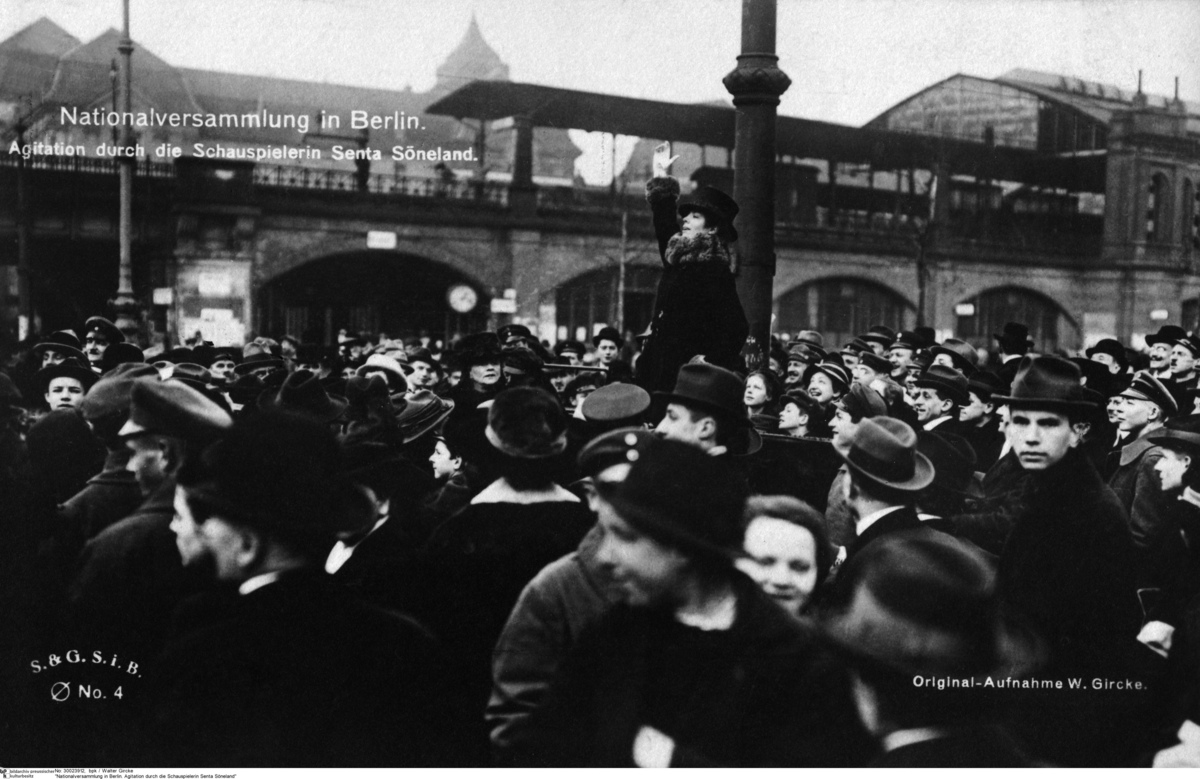
423 representatives total. This photograph shows the stage and film
actress Senta Söneland (neé Werder, 1882–1934), who had been actively
engaged in the fight for women’s suffrage and who in the run-up to the
elections held several passionate speeches. Here she is at an election
rally at the Berlin Zoologischer Garten railway station.