Abstract
A committed pacifist, Bruno Taut (1880-1934) believed that a new
architecture would play a leading role in the creation of a more humane
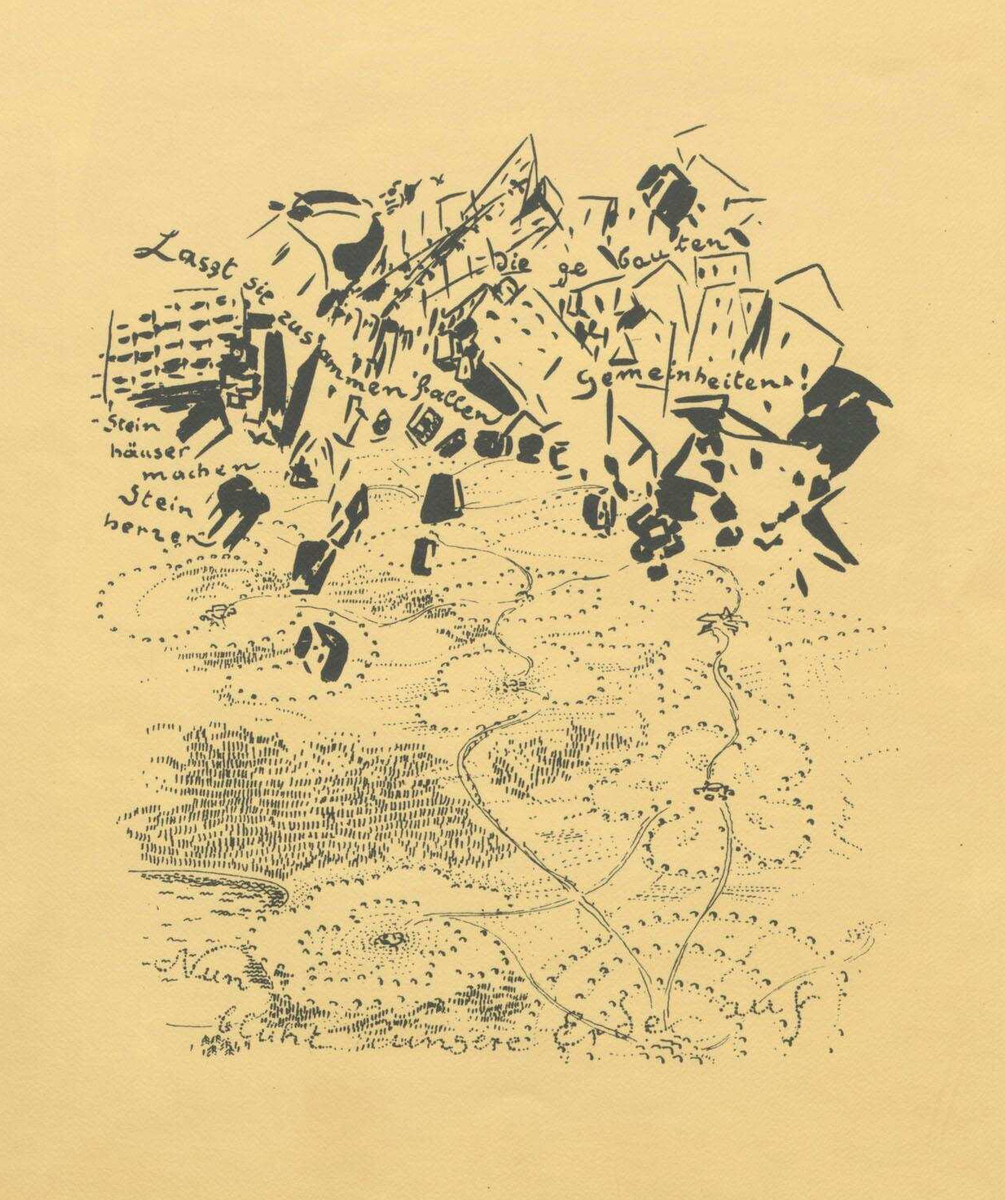
society. In accordance with the motto “Stone buildings make for stone
hearts,” this illustration from his edited volume of architectural
utopia titled The Dissolution of
Cities [Die Auflösung der
Städte], begun during World War I and published in 1920, called for
the old urban centers to fall and make way for a new form of
architecture that would bridge the divide between nature and the city.
Searching for spiritual integrity though beauty, Taut envisioned
humanity in an environment that coupled the dramatic, natural landscape
of the Swiss Alps with man-made building technology. It was an organic
vision of peace that stood in sharp contrast to the wholesale
destruction of landscapes and lives brought about by the mechanized
warfare of the First World War.