Abstract
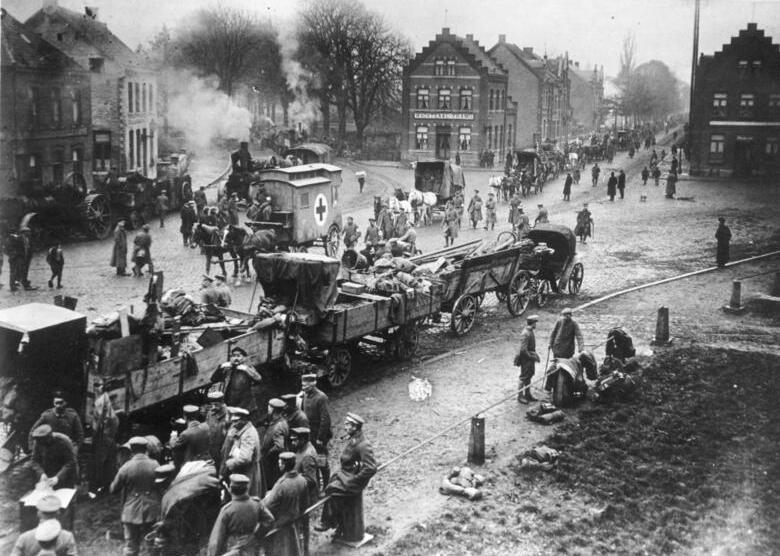
After the armistice was signed, German troops had to vacate the
territories they held in France, Belgium, and Luxembourg within fifteen
days. The same went for those parts of Alsace-Lorraine that Germany was
ceding to France. Consequently, hundreds of thousands of soldiers headed
home in the following weeks and months. By the time the peace treaty was
signed, a total of some eight million German soldiers had to be
demobilized. Civil and military authorities as well as the worker
councils tried to offer returning soldiers a worthy reception. Many
streets and buildings were decorated with flags for the soldiers’
arrival. In a speech on December 10, 1918, President Ebert greeted those
returning from the war as heroes. Despite this reception and public
expressions of gratitude for their sacrifices, an opinion spread,
especially among former officers, that Germany’s troops were
encountering hostility and ingratitude in the homeland. Many experienced
the return after defeat as humiliating. More than military authority was
threatened in their view. In right-wing conservative circles, such
criticisms became a breeding ground for political recriminations as well
as explanations for the German defeat such as the so-called
Stab-in-the-Back Legend.