Abstract
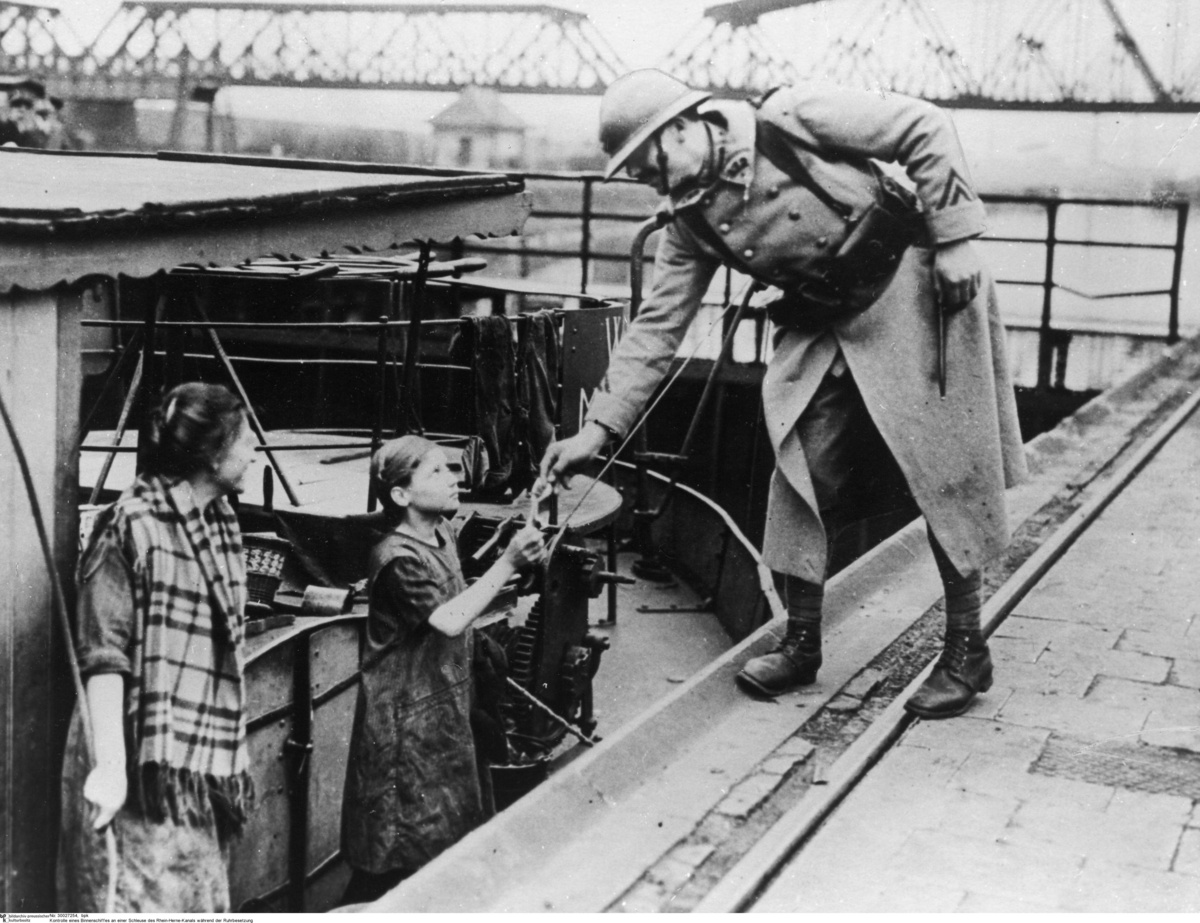
With an economy in the grips of hyperinflation and no viable military
options, the government of Chancellor Wilhelm Cuno (1876-1933) responded
to the French occupation of the Ruhr with a campaign of passive
resistance. French military authorities retaliated with a blockade that
isolated the region from the rest of unoccupied Germany. Although food
imports were exempted from the French blockade, deliveries into the
heavily urbanized Ruhr district were severely disrupted, and the
population suffered as food confiscated by customs officials rotted in
rail yards, on trucks, and in barges on the Rhine. The shortages of food
and other vital supplies ultimately led to the evacuation of more than
200,000 starving and undernourished children from the occupied
region.