Abstract
In 1928, German engineer and businessman Hugo Junkers traveled to the
United States. His purpose was two-fold: first, he wanted to greet the
aviators who had just made the first successful east-west transatlantic
flight in the “Bremen,” and, second, he wanted to visit Henry Ford’s
Detroit factories. The Bremen, a Junkers W33 type aircraft, was the most
structurally advanced airplane of the day. Junkers was interested in the
applicability of Ford’s manufacturing techniques to airplane
construction. He saw civil aviation as an important part of the postwar
revival of industry, and he sought to transform Germany into an
“air-minded nation.” The Bremen’s German pilots, Hermann Köhl and
Günther Freiherr von Hünefeld, were greeted by mass crowds upon their
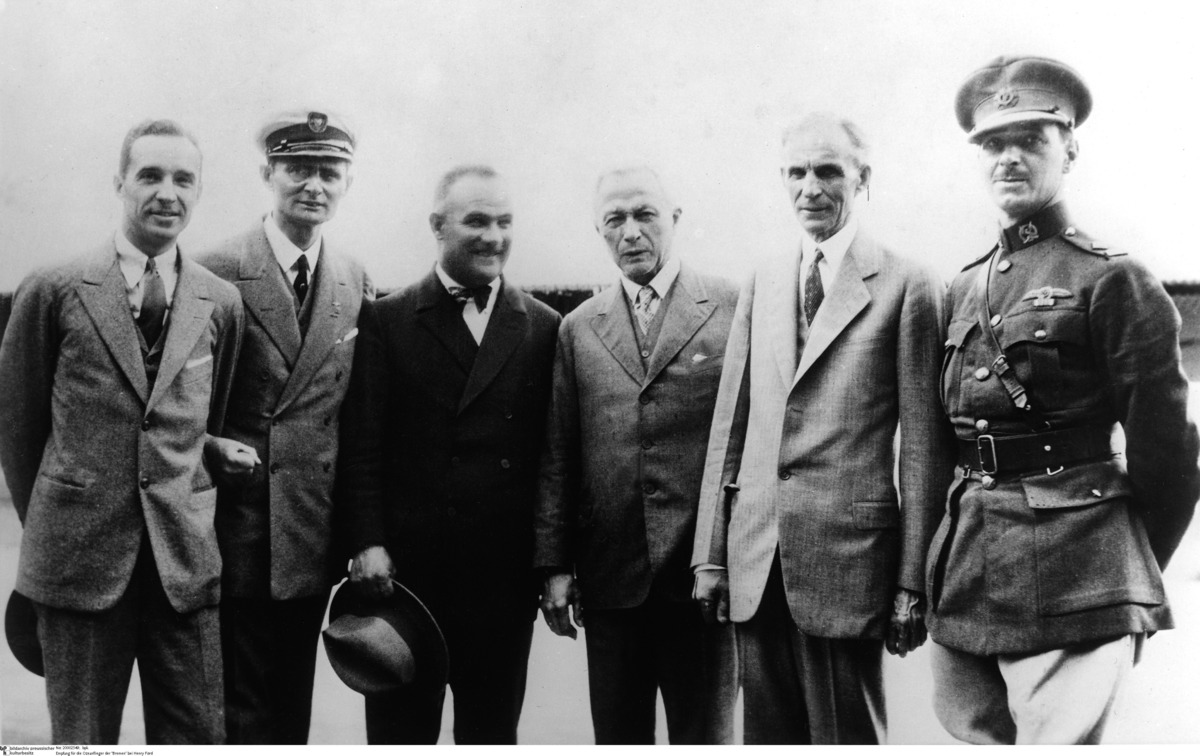
return to Berlin. From left: Edsel Ford, Günther von Hünefeld, Hermann
Köhl, Hugo Junkers, Henry Ford, James Fitzmaurice