Abstract
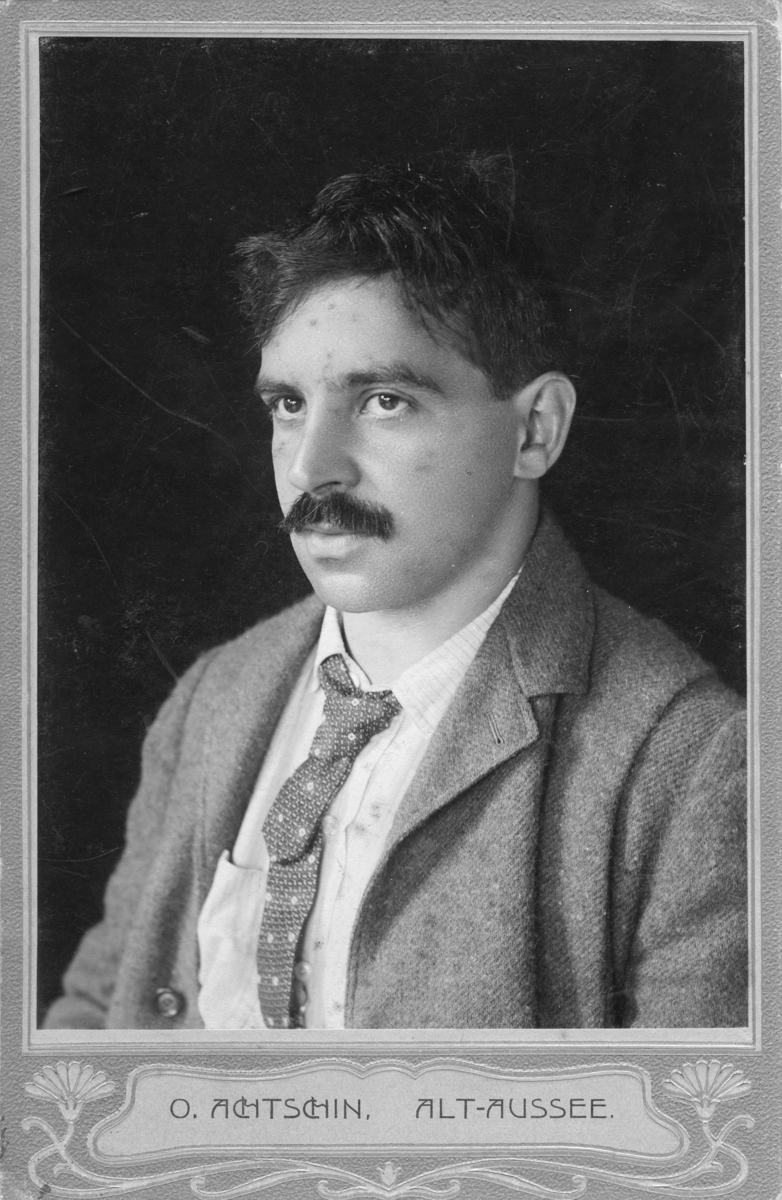
Jakob Wassermann (1873-1934), was a writer, essayist, and theater
critic who enjoyed both popular and critical acclaim. His circle of
literary friendships included Arthur Schnitzler, Hugo von Hofmannsthal,
Thomas Mann, Hermann Hesse, and Samuel Fischer, the founder of S.
Fischer Verlag (and Wassermann's publisher as well). In 1926, he was
elected to the Prussian Academy of Arts, but was expelled in 1933 after
the Nazi takeover. His books were banned that same year. His last book,
Joseph Kerkhoven's Third Existence
[Joseph Kerkhovens dritte Existenz],
was published posthumously in the Netherlands in 1934.
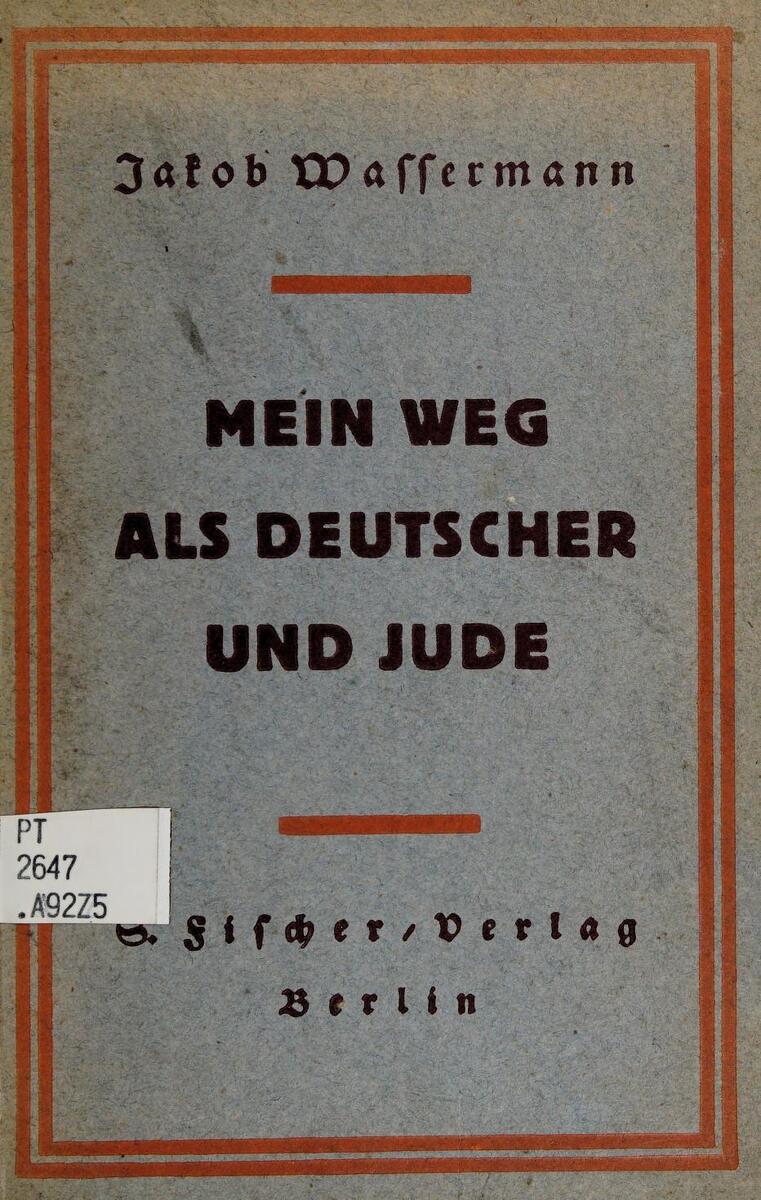
The following passage appears in Wassermann's 1921 autobiography,
My Path as a German and a Jew
[Mein Weg als Deutscher und Jude]. As
the title suggests, Wassermann spent his life grappling with the dual
nature of his identity. “Disregarding my natural inclination to work
with images and characters – and compelled by an inner need and by the
urgency of the times – I would like to give an account of the most
problematic aspect of my life, the one that relates to both my
Jewishness and my existence as a Jew, not as a Jew
per se, but rather as a German Jew,
two concepts that, even from an unprejudiced point of view, open up a
plethora of misunderstandings, tragedies, contradictions, quarrels, and
sorrows. The subject has always been awkward, whether out of shame or
freedom or defiance, sugar-coated on one side, nasty on the other. Today
it is a burning problem. [ . . . ] I stand at the threshold of the fifth
decade of my life, surrounded by a ring of forms
[Gestalten], and all want to reassure
me that what is done has not been done in vain. I am a German, and I am
a Jew, the one as fully and completely as the other. The one cannot be
separated from the other.” From: Jakob Wassermann,
Mein Weg als Deutscher und Jude.
Berlin: S, Fischer Verlag, 1921, pp. 7, 126.