Source
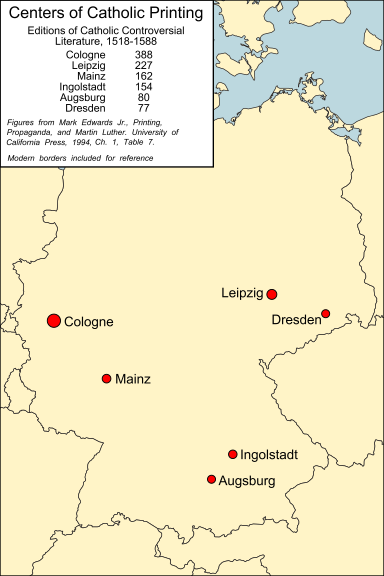
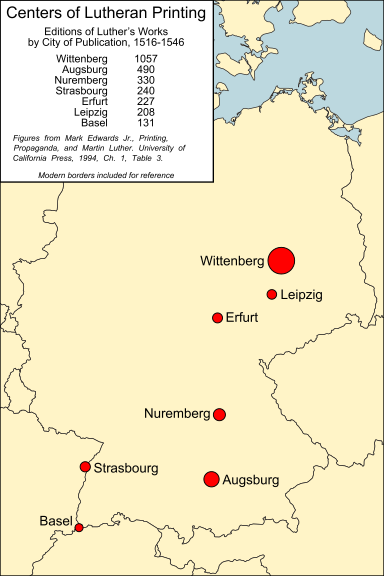
Source: Cartography (WCAG-compliant) by Gabriel Moss, 2025, in collaboration with Greta Kroeker. Based on figures from: Mark Edwards Jr., Printing, Propaganda and Martin Luther. University of California Press, 1994, Chapter 1, table 7.
Printing was an essential tool of both Catholic and
Protestant reform. Printing informed Reformation era religious study through
the publication of bibles and biblical commentaries, annotations, and
translations in Latin, Greek, European vernaculars, and sometimes even
Hebrew and helped spread reformers’ theological views. As the Reformations
progressed, polemical literature, both Catholic and Protestant, emerged as a
powerful weapon designed to defend or promote religious positions.
Protestant printing outpaced Catholic printing, particularly in the more
accessible vernacular, and although a small percentage of the population was
fully literate, printed texts and images circulated both formally and
informally. Broadsheets (single printed sheets), in particular, were often
shared in public settings, spreading the written word to those not able to
read it.
These two maps highlight the centers of Lutheran and Catholic printing and
emphasize the difference in the number of publications between the two
confessions.
Source: Cartography (WCAG-compliant) by Gabriel Moss, 2025, in collaboration with Greta Kroeker. Based on figures from: Mark Edwards Jr., Printing, Propaganda and Martin Luther. University of California Press, 1994, Chapter 1, table 7.