Abstract
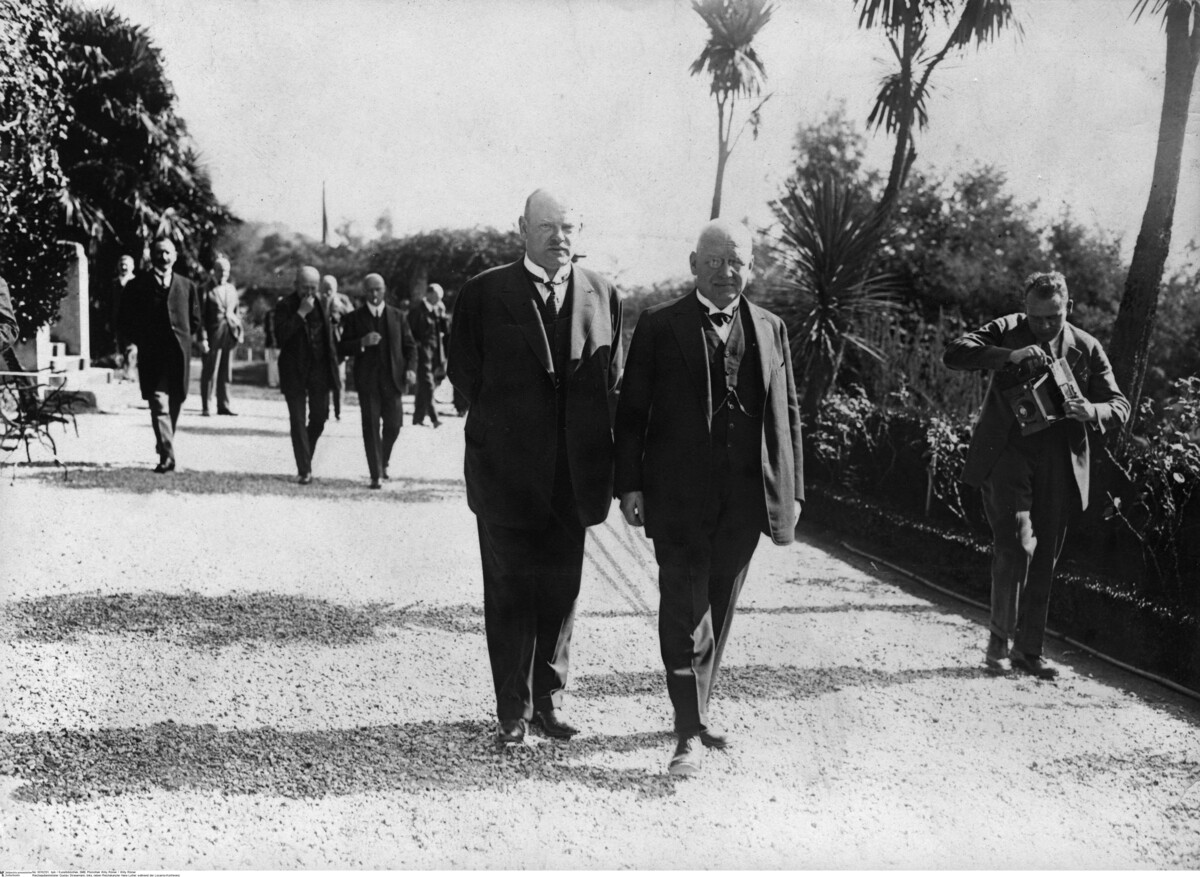
Relations between Chancellor Hans Luther (1879-1962) and Foreign
Minister Gustav Stresemann had been strained prior to their arrival in
Locarno in October 1925. The German National People’s Party
[Deutschnationale Volkspartei or
DNVP], which formed part of Luther’s center-right
Bürgerblock cabinet, strongly opposed
the idea of a security pact with the Western powers. In an effort to
undercut the foreign minister’s position and to underscore the
non-binding nature of the agreement, the DNVP had insisted that
Stresemann travel to Locarno alone. But Luther refused to stay at home,
and he attended the meetings as a full member of the German delegation.
Ultimately, the signing of the Locarno treaties led to the dissolution
of Luther’s cabinet. The second Luther cabinet was formed on January 20,
1926, without the participation of the DNVP.