Abstract
After the Paris Peace Conference was convened on January 18, 1919,
the victorious powers – the United States, Great Britain, France, and
Italy – needed some months for secret negotiations to finalize the
conditions for a lasting peace. On May 7, 1919, they presented their
draft to the German delegation. It stipulated, among other things,
sizeable territorial losses in the east and west of the country and laid
the sole blame for the war on the German Reich. The German
counter-proposals were hotly debated by the victors. Whereas France
insisted on the retention of all points included in the original draft,
the United States and Great Britain were willing to make some
concessions.
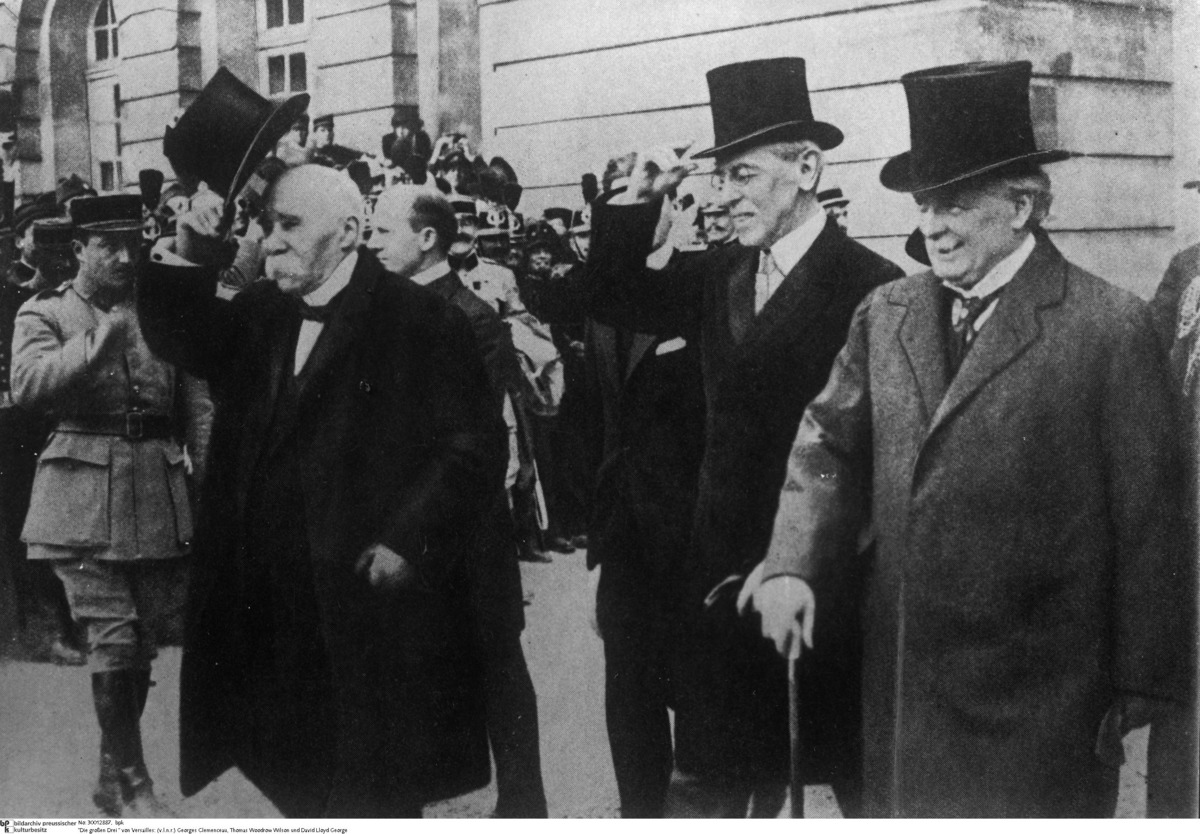
The photograph shows the representatives of the victorious powers,
with the exception of Italy: (from left to right) French Prime Minister
Georges Clemenceau (1841-1929), American President Woodrow Wilson
(1856-1924), and British Prime Minister David Lloyd George
(1863-1945).