Source
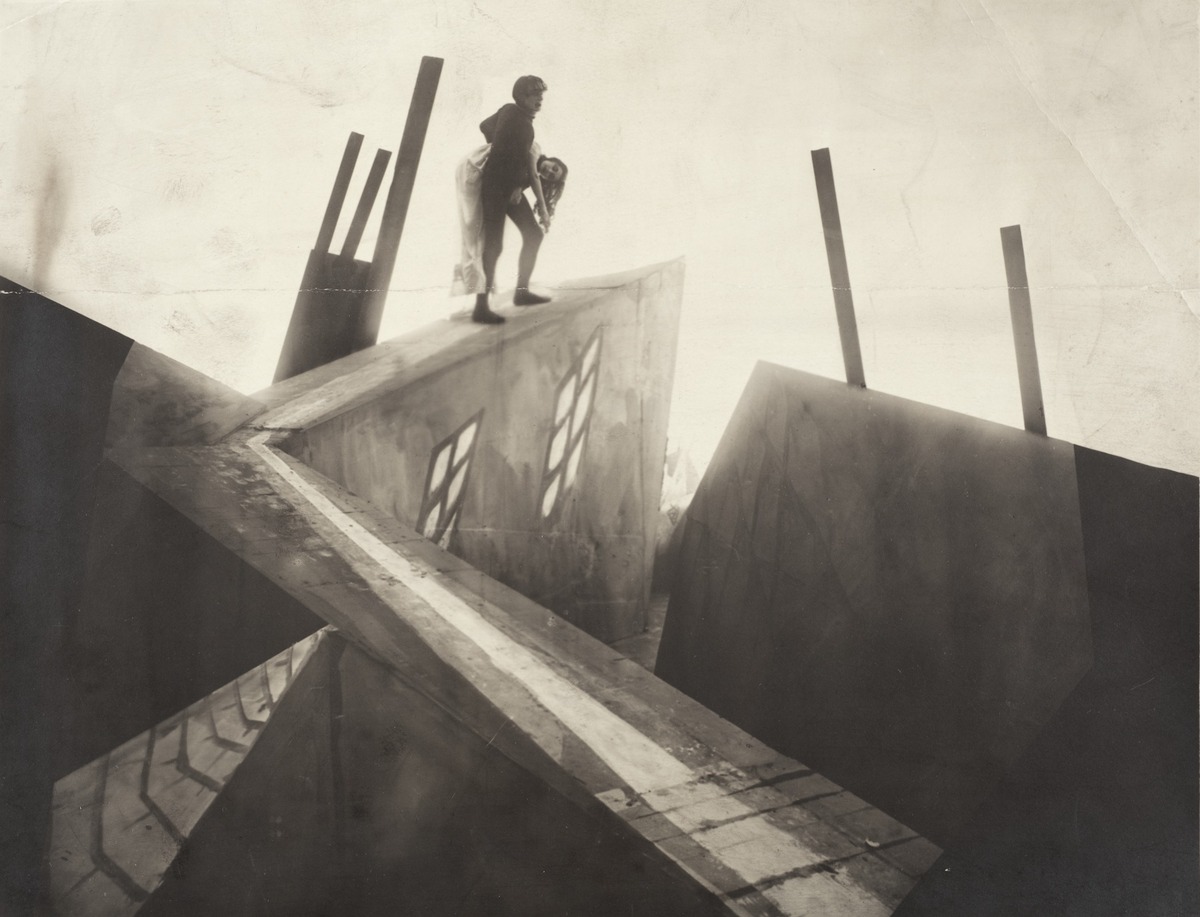
Source: Scene from The Cabinet of Dr. Caligari. The Robert Gore Rifkind Center for German Expressionist Studies (M.82.287.1e) via wikimedia commons
The Cabinet of Dr. Caligari is the story of a traveling doctor who uses a sleepwalker to terrorize a northern German village. The narrative, with its emphasis on sanity and insanity, resonated with the collective trauma of Germans after World War I. The contrast of light and dark and the prevalence of shadows (chiaroscuro) was an Expressionist innovation that greatly influenced filmmaking during the Weimar era. At a time when camera perspectives were fixed, the use of filters and tinting, and the use of lens diaphragms to frame shots, added to the haunting dream landscape. This scene from the film shows Conrad Veidt in the role of Cesare, the sleepwalker, carrying off a woman (Lil Dagover) across rooftops. It was Veidt's breakthrough role, and he would become one of the best-known German actors of this period.
Source: Scene from The Cabinet of Dr. Caligari. The Robert Gore Rifkind Center for German Expressionist Studies (M.82.287.1e) via wikimedia commons