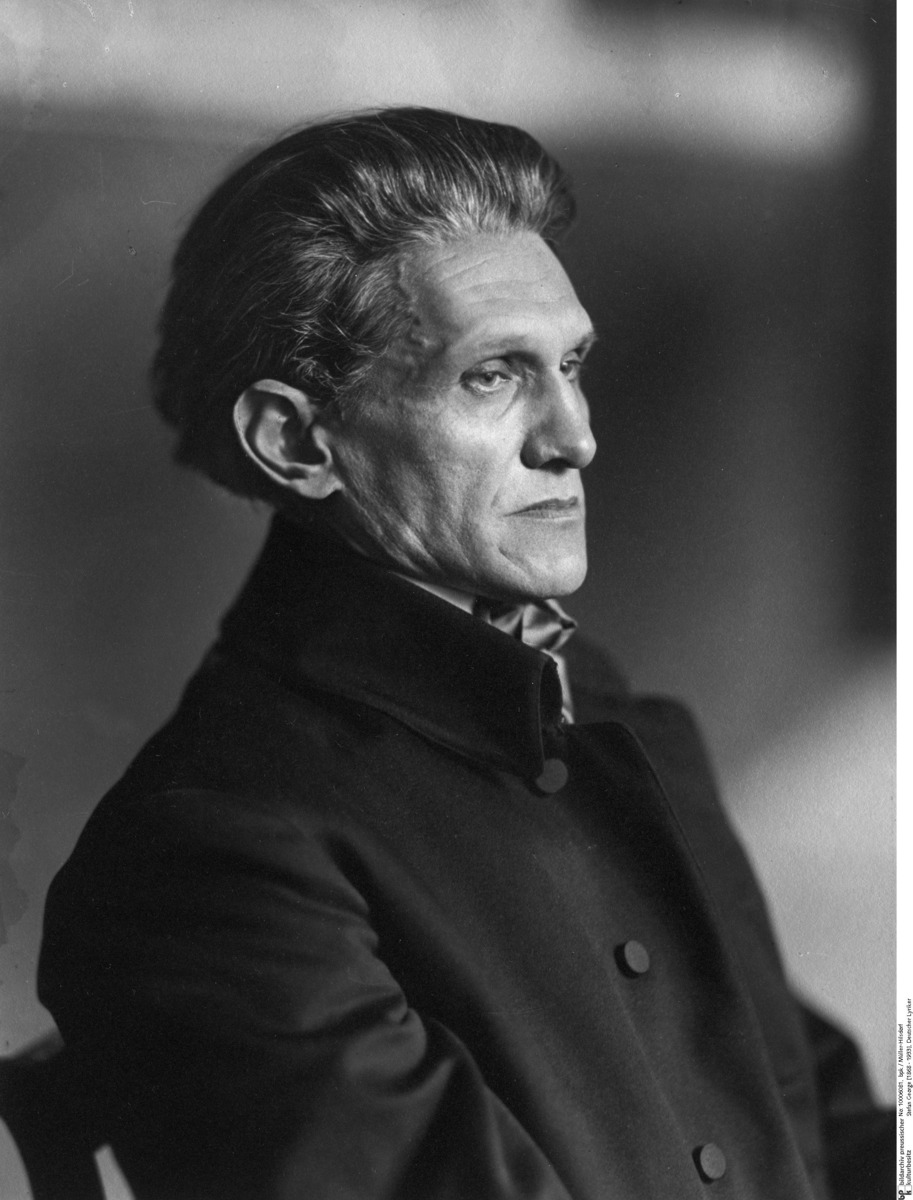
Abstract
Stefan George (1868-1933), who espoused an elitist
poetic ethos hostile to mass culture, is remembered chiefly as a proponent
of fin-de-siecle aestheticism and for the small
circle of devoted followers he cultivated known as the George Circle [George-Kreis]. The literary magazine he founded in
1892, Blätter für die Kunst, was the principal organ
of his French symbolist inspired “l’art pour l’art”
aesthetic program and catered to an exclusive, members-only readership.
George’s popularity reached its peak in the years after WWI, and the themes
of his later work, heroism, chastity, and the creation of a hierarchical
moral spiritual social order inspired many leading intellectuals, officers,
businessmen, and political figures. Later Joseph Goebbels would offer him
the presidency of a new Academy of Poetry. George, who had declined the
invitation to join the original Sektion für Dichtkunst der Preußischen
Akademie der Künste in 1926, refused. Alluding to the George-inspired ideal
of a “New Reich” [Neues Reich] led by an elite,
moral-spiritual aristocracy, Claus Schenk Graf von Stauffenberg, who was a
member of the George Circle, is said to have shouted “Long live secret
Germany” [Es lebe das Geheime Deutschland] before
his execution by firing squad for the attempted assassination of Adolf
Hitler.