Abstract
The Treaty of Versailles (1919) stipulated the
temporary occupation of the Rhineland by Allied troops and its eventual
demilitarization. The occupation was intended to secure Germany's
reparations payments while creating a buffer zone to protect France and
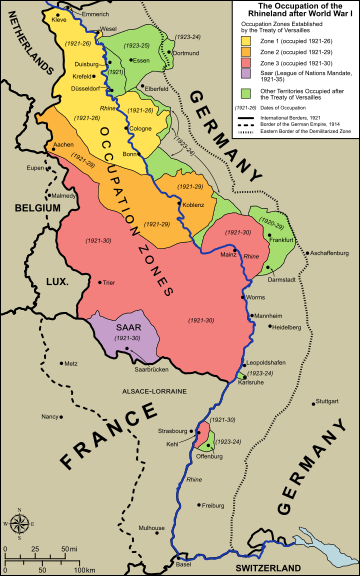
Belgium from German attacks. As shown on this map, there were three
occupation zones: A zone around Cologne and around the Aachen area (Belgian
and British), a zone that included Koblenz (American, French), and a large
zone that included Mainz and Trier (French). The Inter-Allied Rhineland
Commission, based in Koblenz, was responsible for administering the Allied
occupation. The occupation period formally began after the Treaty of
Versailles came into force in 1920 and was gradually phased out, ending with
the evacuation of the Mainz zone in June 1930. The map also shows the areas
around Duisburg and Essen, which were occupied by French and Belgian troops
from 1923 to 1925 (Ruhr occupation) in order to demand reparations payments
after the First World War and to control coal and steel production. French
troops also occupied parts of Hesse, including Frankfurt and some
surrounding areas, from 1920 until the formal end of the occupation in
1929/30. As stipulated by the Treaty of Versailles, the Saarland was under
the mandate of the League of Nations from 1920 until the plebiscite of
1935.