Source
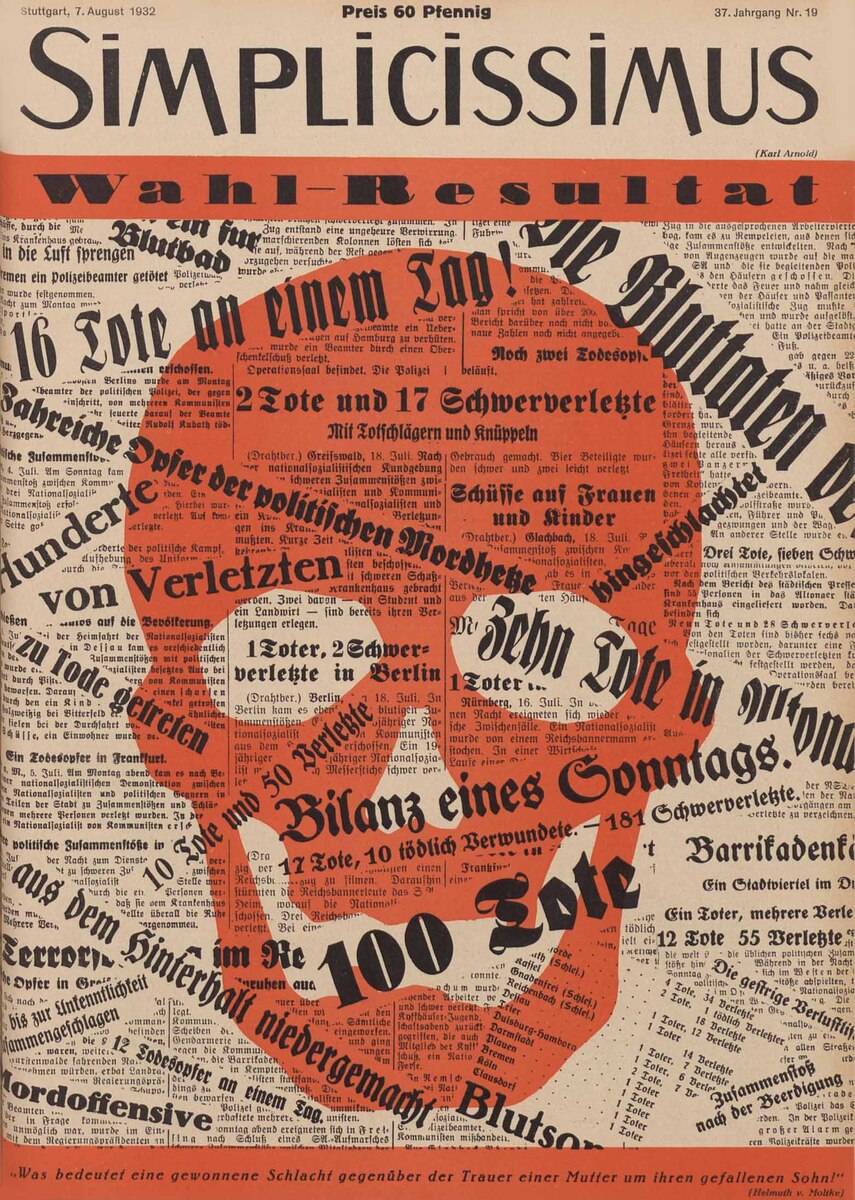
Source: Simplicissmus No. 19,
August 7, 1932,
Cover.
http://www.simplicissimus.info/typo3temp/_processed_/csm_37_19_217_f46c9ff5f1.jpg
In the run-up to the Reichstag elections on July 31, 1932, violent street fights broke out during campaign rallies in numerous places, often involving the use of weapons. In mid-June of that year, the Papen government had lifted the ban on the SA and SS, which had been imposed only a few months earlier by then Chancellor of the Reich, Heinrich Brüning. As a result, National Socialists and Communists, but also groups loyal to the Republic such as Reichsbanner and Eiserne Front, attacked each other in their meeting places and on the streets. It was the bloodiest election campaign that the Weimar Republic had experienced thus far; 12 people died on election day alone. Nevertheless, at over 84%, voter turnout was higher than in any previous Reichstag election. After the elections, the Nazi Party (NSDAP) became the largest party in the Reichstag for the first time, but they did not win an absolute majority. The Nazi Party and the Communist Party now held over half of the seats in the Reichstag, making it impossible to form a moderate government.
This is the cover of the August 7, 1932 issue of the satirical magazine Simplicissimus. Titled "Election Result," the collage of newspaper headlines comments on the shocking violence during the election campaign of summer 1932. The increasing political instability and radicalization during the final years of the Weimar Republic became particularly evident during election campaigns, when rallies often descended into violent intimidation and deadly street fighting.
Source: Simplicissmus No. 19,
August 7, 1932,
Cover.
http://www.simplicissimus.info/typo3temp/_processed_/csm_37_19_217_f46c9ff5f1.jpg
