Abstract
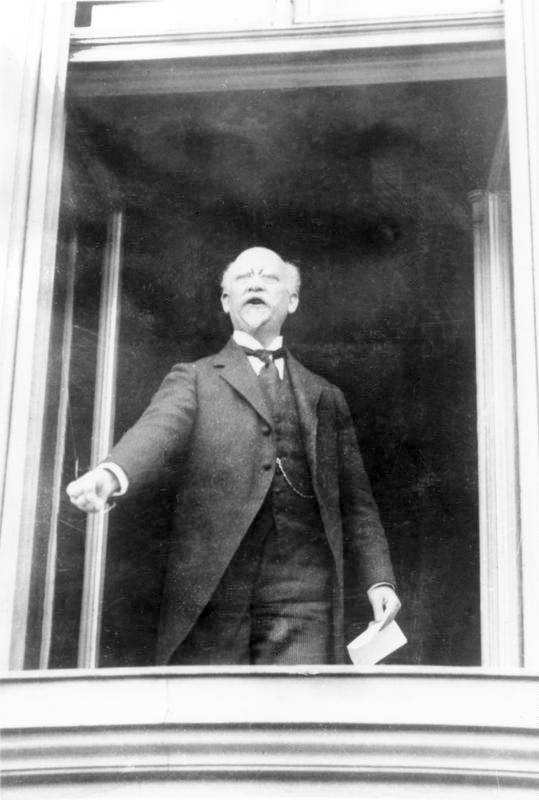
Philipp Scheidemann (1865–1939) proclaimed the republic in Berlin on
November 9, 1918, paving the way for Germany’s first democracy: “The old
and rotten, the monarchy, has collapsed. Long live the new! Long live
the German republic!” Scheidemann came from a humble background, and his
education was largely the product of self-study; however, he acquired a
reputation as an excellent public speaker. He rapidly climbed the SPD
ranks to the party leadership. He became a member of the party executive
committee in 1911, and in 1917 he was elected party leader with
Friedrich Ebert. After the proclamation of the republic, Scheidemann
became a member of the First Council of People’s Deputies. On February
13, 1919, he became Reich minister-president and thus the first head of
a Weimar government, although he resigned already in June over the terms
stipulated by the Versailles Treaty. After the Nazi seizure of power, he
fled Germany for Denmark, where he died in 1939.