Source
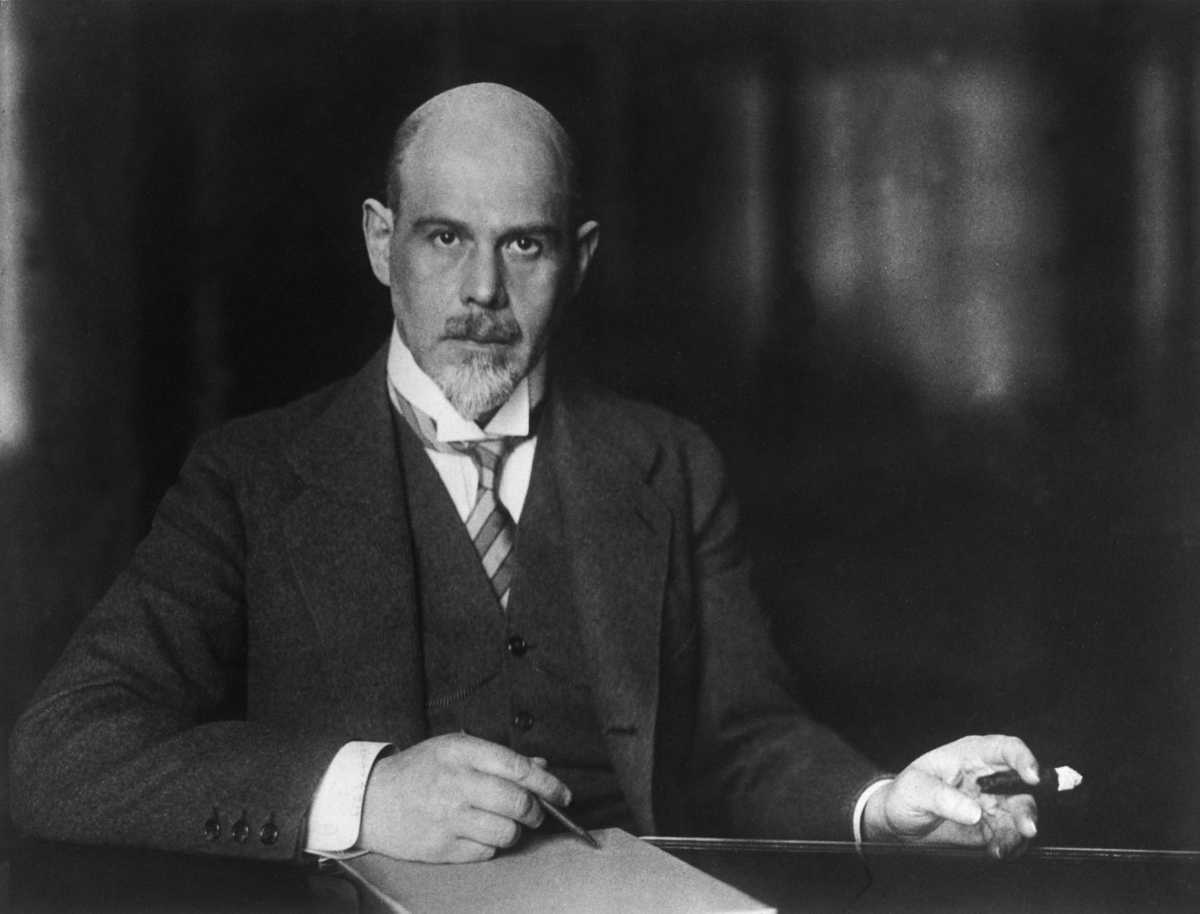
Source: Walter Rathenau, c. 1920.
bpk-Bildagentur, image number
10007235. For rights inquiries, please contact Art Resource at
requests@artres.com (North America) or bpk-Bildagentur at
kontakt@bpk-bildagentur.de (for all other countries).
Walther Rathenau (1867-1922), a successful businessman, author, and politician, was one of the most important German Jews of his generation. The son of the wealthy industrialist Emil Rathenau, who founded the AEG [Allgemeine Elektrizitäts-Gesellschaft, General Electric Company], Rathenau served as head of the War Raw Materials Department of the Prussian War Ministry [Kriegsrohstoffabteilung (KRA)] during the First World War. It was his department that oversaw the mobilization of German industry for the war effort. Later, Rathenau went on to serve as minister for reconstruction from May to November 1921, and then as foreign minister from February until June 1922. As foreign minister, he upset German nationalists by arguing that the country should attempt to fulfill its obligations under the Treaty of Versailles; he also upset conservatives by negotiating the Treaty of Rapallo with the Soviet Union. In response, radical nationalists assassinated him in 1922, accusing him of being part of a Jewish-Communist conspiracy. One of Rathenau’s most famous literary works was Höre, Israel [Hear, O Israel], in which he rejected Zionism and encouraged German Jews to assimilate into German society.
Source: Walter Rathenau, c. 1920.
bpk-Bildagentur, image number
10007235. For rights inquiries, please contact Art Resource at
requests@artres.com (North America) or bpk-Bildagentur at
kontakt@bpk-bildagentur.de (for all other countries).
Bildarchiv Preußischer Kulturbesitz