Abstract
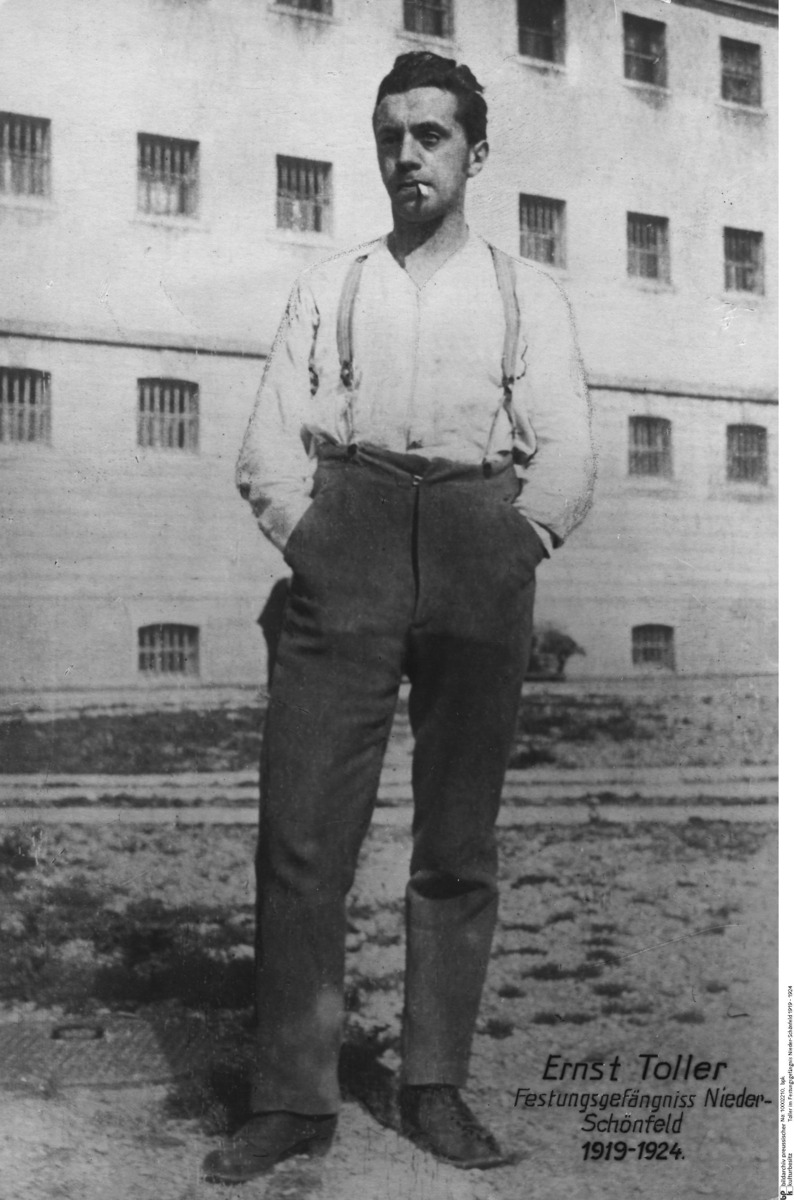
In 1919 playwright Ernst Toller (1893-1939) was
sentenced to five years in prison for his role in the Bavarian Soviet
Republic [Bayerische Räterepublik]. While in prison
he wrote many of the works that would establish his literary reputation.
Several of his plays were premiered while he was still in prison, most
famously, “The Machine Wreckers” [Die
Maschinenstürmer], which opened days after the murder of Walter
Rathenau and turned into a political demonstration against enemies of the
Republic. Toller aspired to what he called a “revolutionary dramatic and
epic art.” His work was strident, confrontational and deliberately
offensive. After his release from prison, he was expelled from Bavaria and
went to Berlin. Since he was both a socialist and Jewish, he was forced to
emigrate when the Nazis came to power. He committed suicide in a New York
City hotel in May 1939.