Abstract
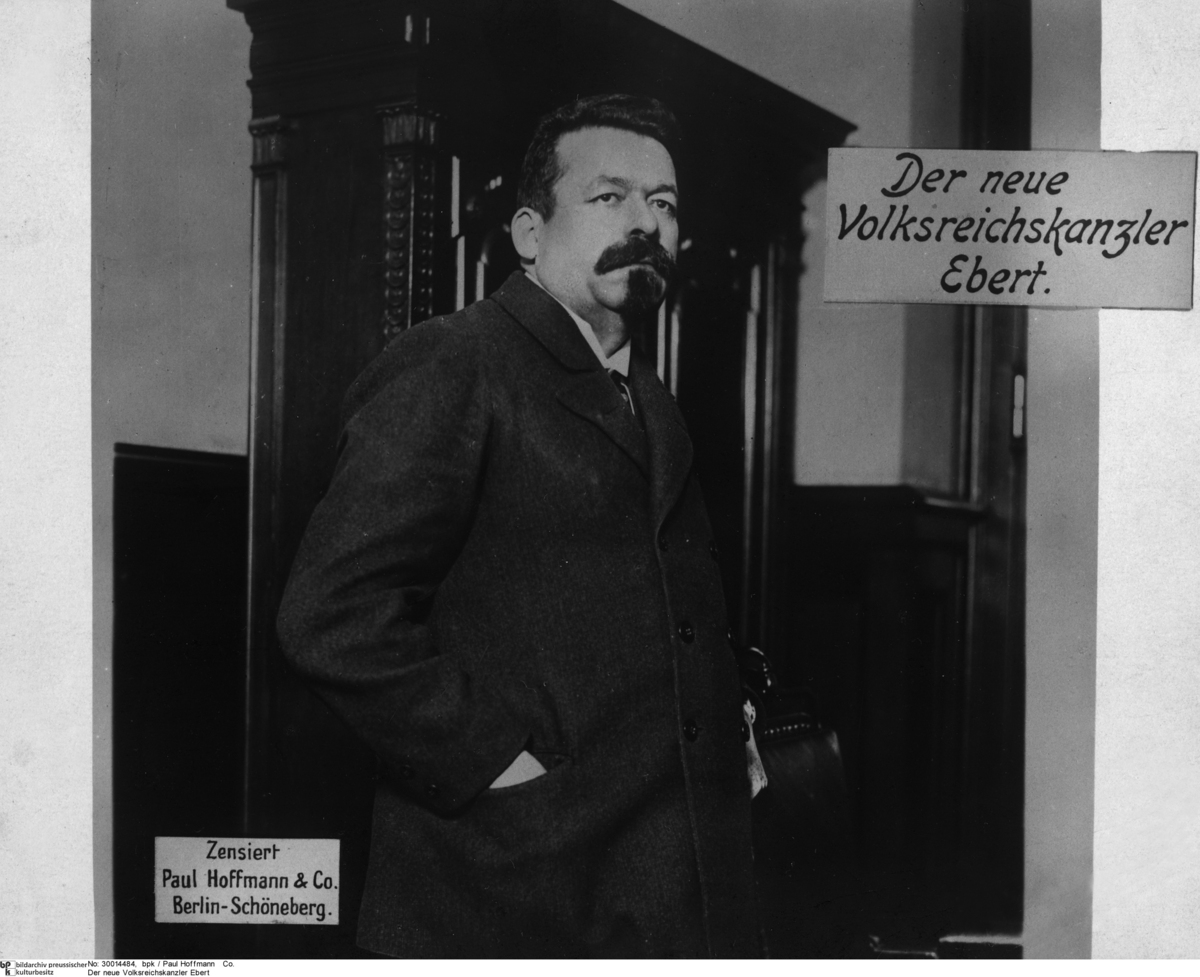
Friedrich Ebert (1871-1925), SPD leader since 1913, was appointed
Reich Chancellor by predecessor Max von Baden on November 9, 1918,
because the SPD was the strongest party in the Reichstag. At the time,
Ebert’s primary concerns were to avoid a bloody revolution, such as had
occurred in Russia, and to determine and legitimize Germany’s new
constitutional order via a national assembly. This 1918 photo postcard
presents Ebert as “National [or People’s] Reich Chancellor”; however, he
only held this title for one day because the Council of People’s
Representatives was established the next day to assume the business of
government. Ebert served as one of two chairs in the council. Soon after
the national assembly election on January 19, 1919, he was elected
Germany’s first president. For many, he was a controversial choice for
the office. The radical left despised him as a “traitor to the working
class” and an “agent of the bourgeoisie,” whereas National Socialists
later sought to besmirch him as “November criminal.”