Abstract
The painter and graphic artist George Grosz
(1893-1959) became known primarily for his sharp-witted satirical depictions
of Weimar society. Stylistically, his work is associated with the New
Objectivity [Neue Sachlichkeit] movement, but he was
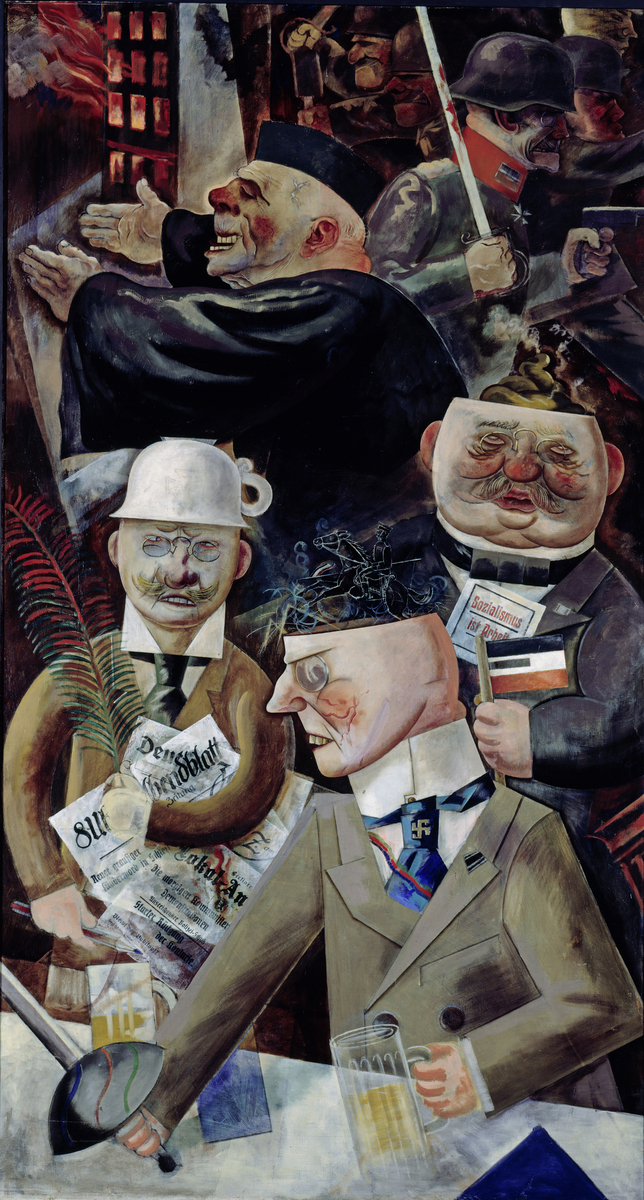
part of Berlin’s Dada scene as well. Pillars of
Society (1926), which depicts members of the social elite during
the Weimar era, is among his most famous paintings. Born Georg Groß, he
anglicized his name in 1916 out of disgust for the rampant nationalism that
had taken hold in Germany during World War I. He emigrated to the United
States immediately after Hitler seized power in 1933, just a few days before
the Gestapo raided his apartment and studio and destroyed or sold all the
works he left behind.