Abstract

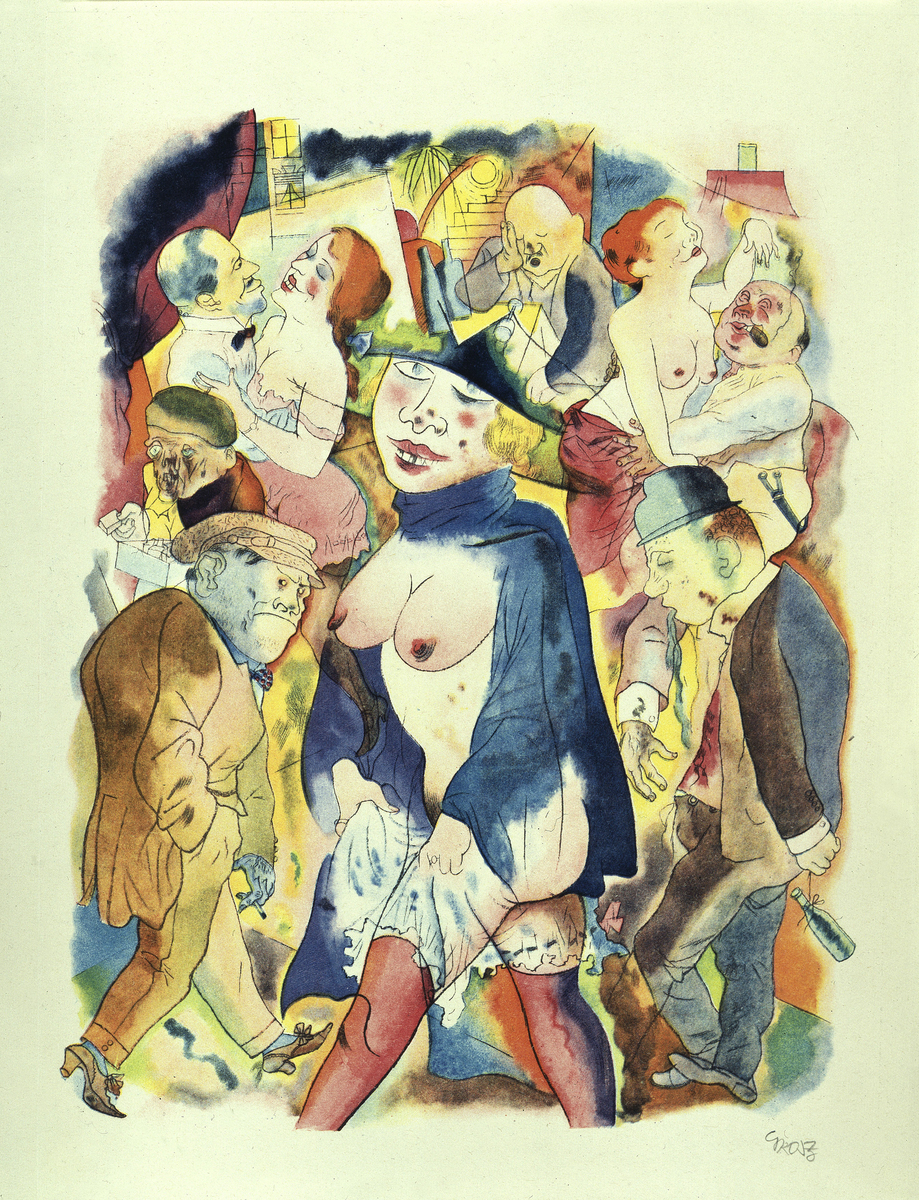
George Grosz’s (1893-1959) Waltz Dream (1921) was published in 1923 as part of a collection of watercolors and drawings entitled Ecco Homo. The works in the collection satirize Weimar-era society and politics and resulted in a lawsuit against Grosz on the grounds of an “attack on public morals.” Grosz would sharpen and develop his style throughout the 1920s, attacking what he saw as a morally corrupt social and political order. His works have come to be seen as iconic representations of Weimar-era Berlin.

George Grosz, Waltz Dream (1921)

  • Otto Dix

Source

Source: George Grosz, Waltz Dream, 1921, color plate 13 from the collective work: Ecce Homo. Original: Kupferstichkabinett, SMB.
bpk-Bildagentur, image number 00011178. For rights inquiries, please contact the bpk picture agency: kontakt@bpk-bildagentur.de or Art Resource: requests@artres.com (for North America).

bpk / Kupferstichkabinett, SMB / Jörg P. Anders / Artists Rights Society (ARS), New York