Abstract
Austrian writer Rainer Maria Rilke (1875-1926), is
widely regarded as one of the most significant poets in the German language.
The themes of transience and transformation which he explored in his poetry
mirrored his peripatetic life, which spanned the decades of upheaval and
change from the belle époche, through World War I,
to the Weimar Republic. In 1901 he married the sculptor Clara Westhoff, but
left her shortly after their daughter was born. Troubled by financial
worries throughout his life, he cultivated and was supported by a network of
relationships and friendships from social luminaries and aristocratic
patrons such as Princess von Thurn und Taxis and Harry Count Kessler, to
prominent intellectuals such as Hugo von Hofmansthal, Paul Valéry, Stefan
Zweig and André Gide. He spent most of the war years in Munich and left in
1919 after the overthrow of the Bavarian Soviet Republic, which he had
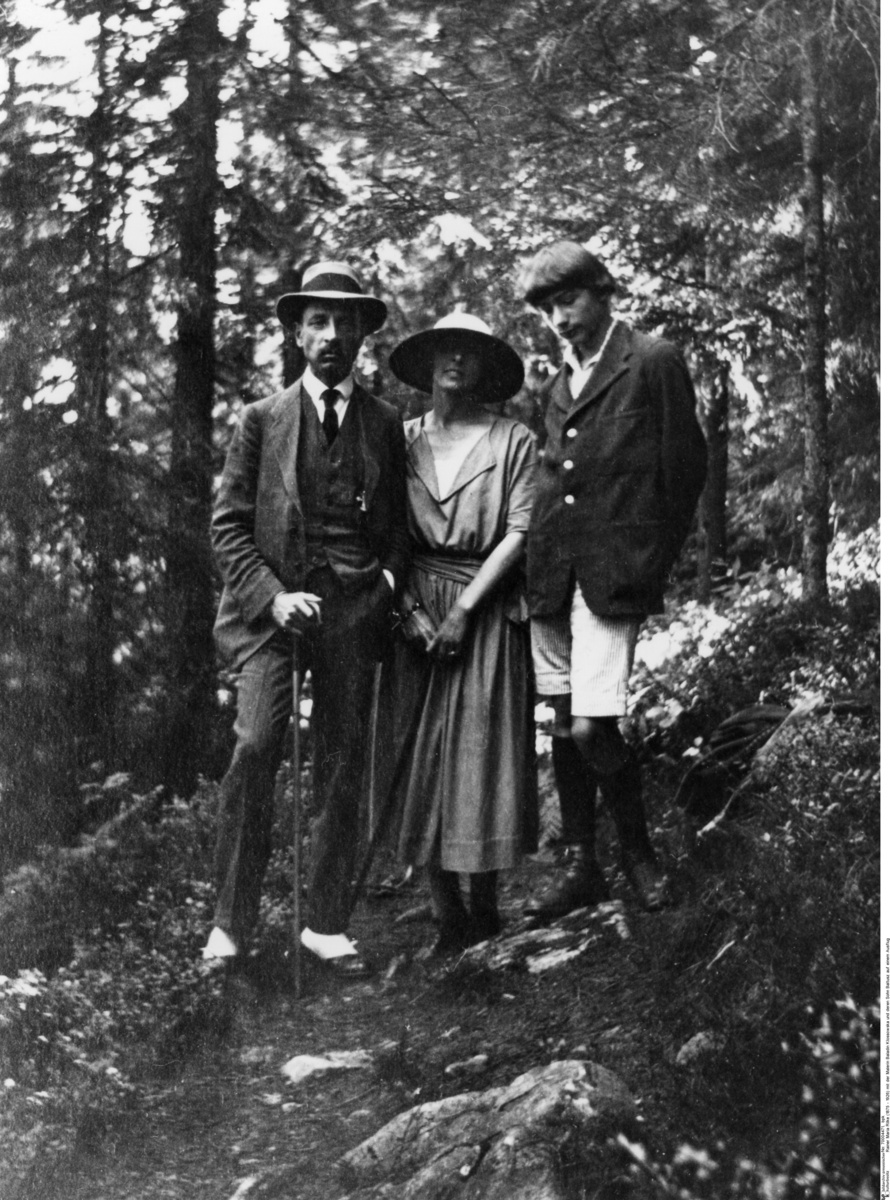
supported. The photograph shows him with his lover, the painter Elisabeth
Dorothée (Baladine) Klossowska, whom he met shortly after his departure from
Munich. She would remain a significant figure in his life. He would also
remain close with and sponsor her son, Balthasar, who would become known as
the painter Balthus (1908-2001). The picture shows them in Switzerland,
where Rilke, who suffered from leukemia, lived during the final years of his
life.