Abstract
When the Prussian government fired the Berlin Chief of Police Emil
Eichhorn (USPD), accusing him of having supported the People’s Naval
Division during the Christmas Rebellion, it resulted in further unrest
and mass demonstrations by the radical left. Armed insurgents occupied
the offices of the SPD newspaper
Vorwärts as well as numerous other
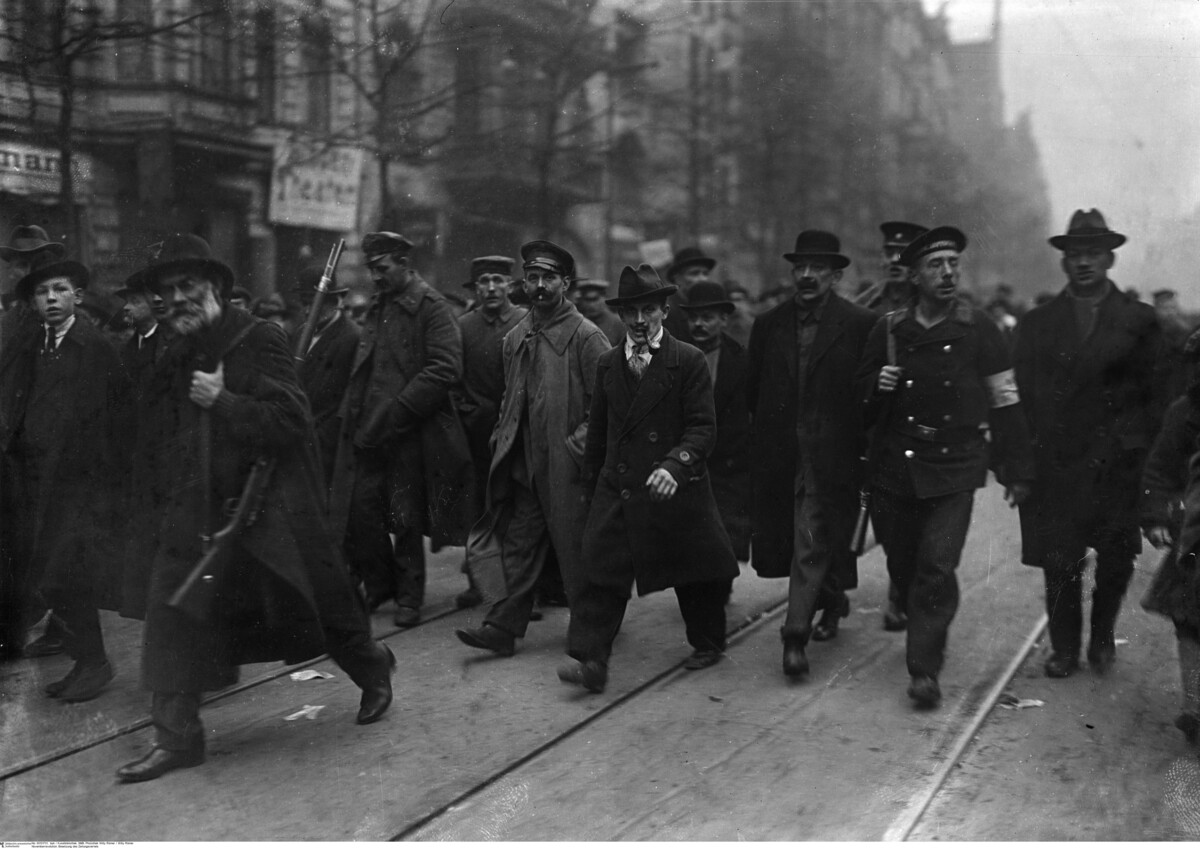
press buildings in the Berlin newspaper quarter. This picture shows
armed revolutionary soldiers and civilians on the streets of the
quarter. Their aim was to prevent elections to the National Assembly
(which was supposed to prepare the way for a parliamentary democracy)
and instead establish a socialist soviet republic
[Räterepublik]. A revolutionary
committee under the leadership of Karl Liebknecht and the USPD
politician Otto Ledebour denied the legitimacy of the Council of
People's Deputies, declaring it over. Negotiations between the Social
Democratic government and the insurrectionists fell apart. Military
suppression of the revolt began on January 8 – on Gustav Noske's orders
– and lasted until January 12, costing many lives. In a bloody
demonstration of the press’s interpretive power over the hectic
revolutionary events, the newspaper quarter saw especially heavy
fighting. After the January uprising was forcibly ended, military and
Freikorps units conducted "clean-up operations" in order to
stifle any final revolutionary urges. Rosa Luxemburg and Karl Liebknecht
were among the victims.