Abstract
Rudolf Steiner (1861-1925), a lifestyle reformer and new-age pioneer,
launched an experimental educational system in 1919 in response to a
request from the head of the Waldorf-Astoria cigarette company in
Stuttgart, Emil Molt, to establish a school for the children of his
employees. His system has grown over the ensuing century to include
thousands of schools and kindergartens across the globe, one of the
world’s most influential independent school movements. Steiner conceived
of his Waldorf school as a corrective to the disciplinary tradition in
German pedagogy, and his students spent a lot of time in creative
activities and improvisational play, an approach that emerged out of
both the school’s hurried opening and Steiner’s educational philosophy.
He encouraged children to first engage their hands, then their hearts,
and then their brains, with the aim of guiding them to the "etheric
world" of their pre-birth. Waldorf students immersed themselves in
a form of expressive movement known as “eurythmy” at an early age, for
instance, but they might not learn to read until the second or third
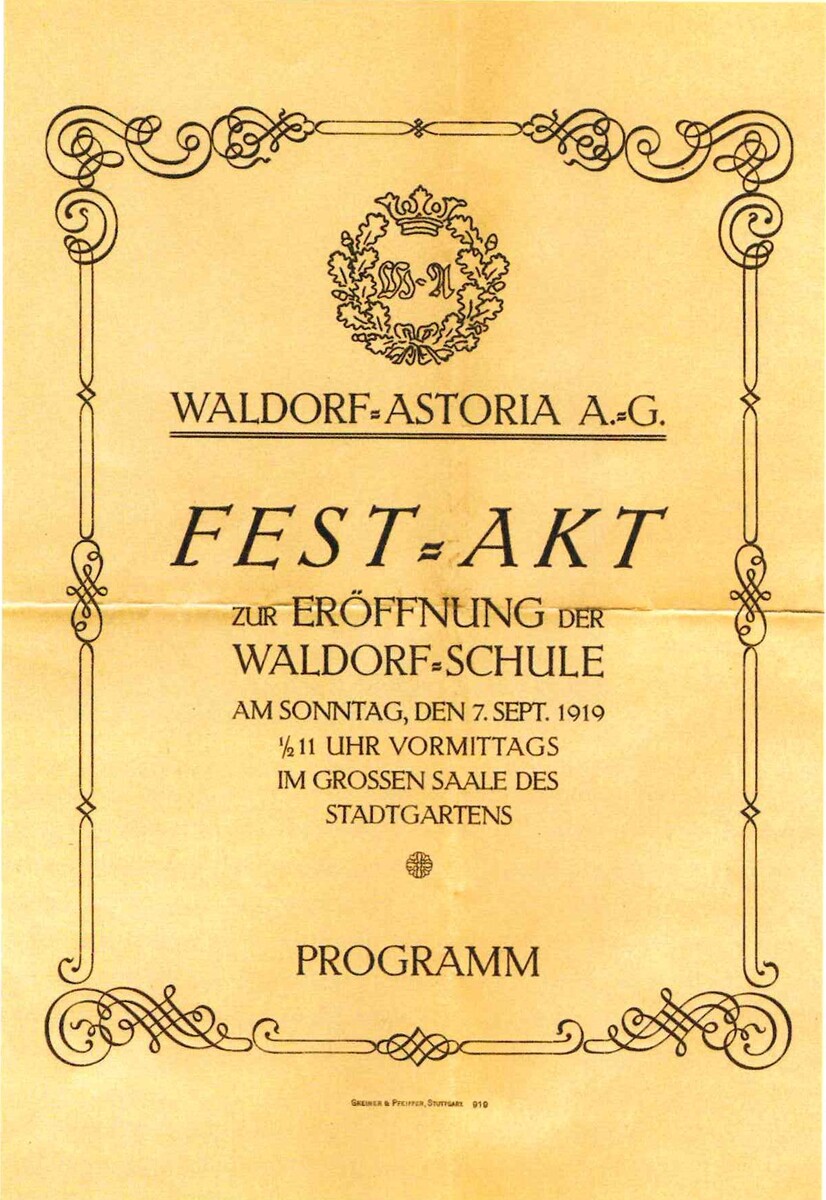
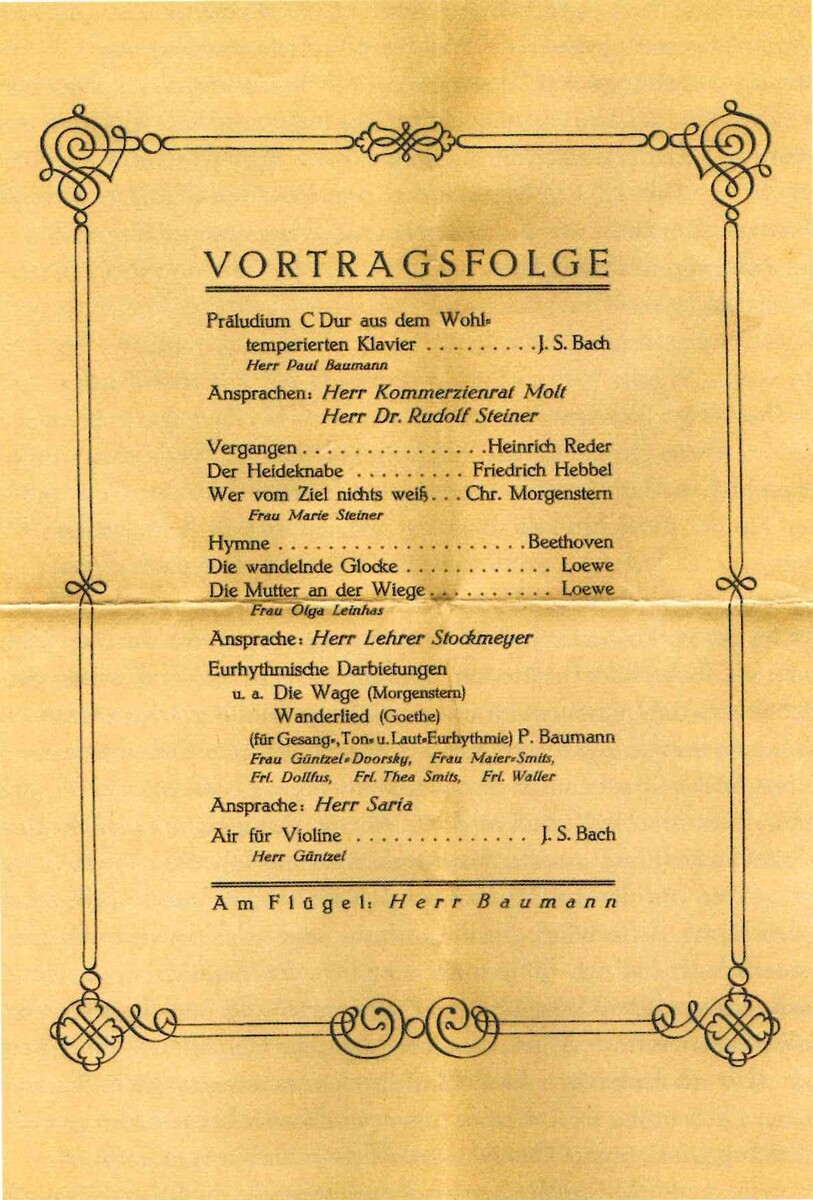
grade. Pictured here is the two-page program for the first Waldorf
school’s opening celebration in Stuttgart. In addition to poetry
readings and speeches, it also included a eurythmic performance.