Abstract
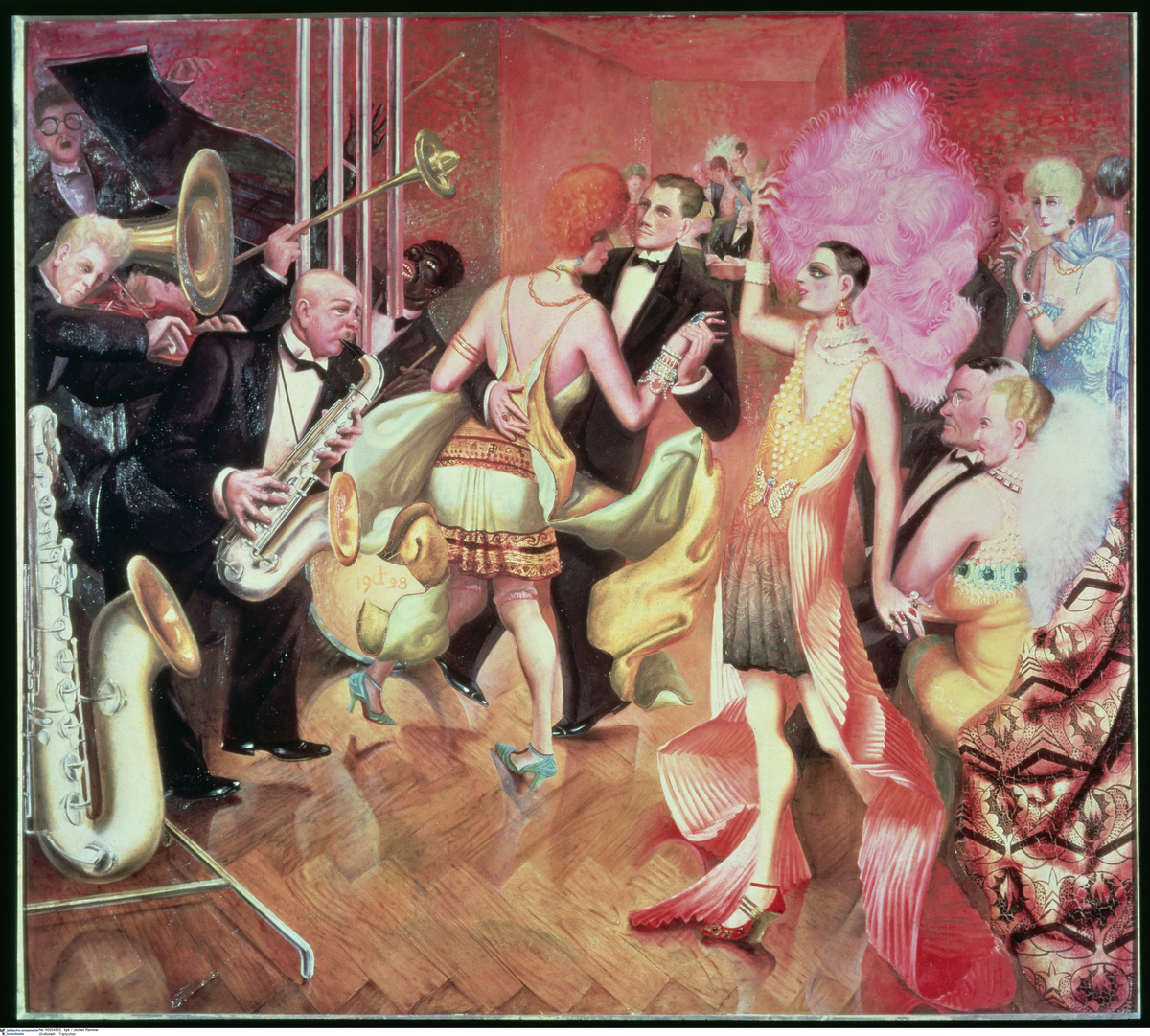
One of Otto Dix’s most ambitious works, the triptych
Metropolis [Großstadt]
combines his major themes of war, moral corruption, and decadence in a form
reminiscent of a medieval altarpiece. The work consists of three panels; the
center one appears below. This jazz club scene has been read as a portrait
of the so-called New Woman [neue Frau] of Weimar
society. Dix gives this “New Woman” both an exaggerated and aggressive
feminine sexuality as well as an androgyny represented by her fashionably
short haircut. Jazz, at once the epitome of avant-garde urban modernity and
an expression of “primitive” sensuality, was viewed with both fascination
and fear.