Abstract
Following their failed coup in November 1923, key figures including
Adolf Hitler were put on trial for high treason and found guilty. At the
sentencing on April 1, 1924, most of them were given very lenient prison
sentences while Erich Ludendorff was acquitted. Hitler and four of his
fellow insurgents served their sentences together in Landsberg prison.
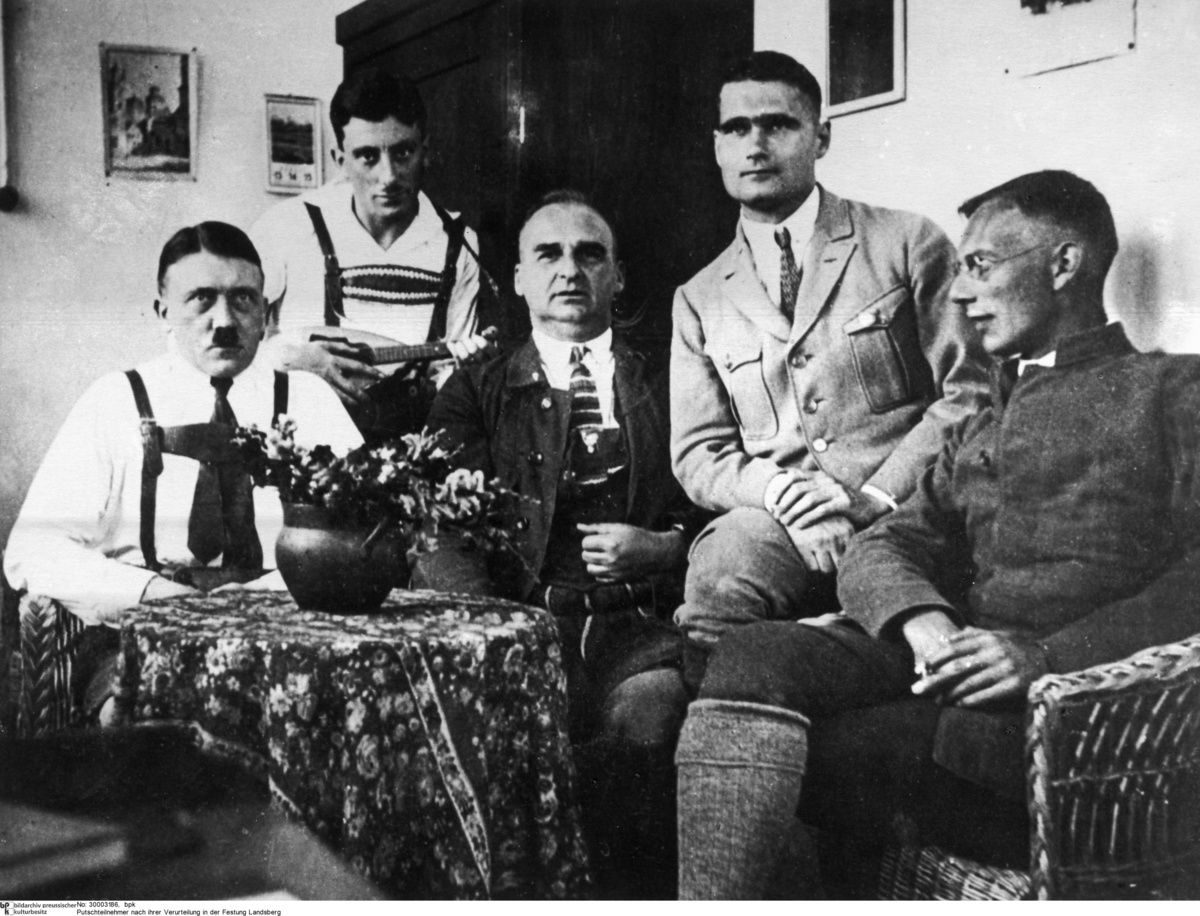
This photo shows (left to right) Hitler with fellow convicts Emil
Maurice (his bodyguard and driver), Hermann Kriebel (head of the
paramilitary organization Deutscher Kampfbund), Rudolf Heß (who became
Hitler’s personal secretary), and Friedrich Weber (head of the
paramilitary organization Bund Oberland). Maurice and Heß had been
sentenced to prison terms for their involvement in the attempted putsch
in a second, smaller trial.
As this photo documents, Hitler and his fellow convicts enjoyed
fairly comfortable prison conditions. They were housed in a separate
tract of the prison where each of them had their own cell and a shared
living room, where they were allowed to receive visitors unsupervised.
While imprisoned, Hitler wrote most of the first volume of his book,
Mein Kampf, which would become
central to Nazi ideology and propaganda. On December 20, 1924, Hitler,
who had been sentenced to five years in prison, was released on
probation, as were all of the other putschists. After the Nazis came to
power in 1933, Landsberg prison became a place of pilgrimage for
followers and functionaries of National Socialism.